The questions Tasmanians ask us most, answered by the people who design and install the systems.
Entry-level solar systems in Tasmania start at around $7,000, with most home installs running up to $25,000 or more depending on system size. As with any investment, the more you put into your system, the more you can save long term, as long as your home's actual energy use is there to back it up.
Yes, for most homes with a decent power bill, but how much you save depends on your usage, roof, and system size, which is why we quote off your actual bill rather than a generic answer.
There's no single number - it comes down to how much you invest and how well the system matches your actual energy use. A bigger, well-sized system saves more over time, but only if your household genuinely uses or exports what it produces, which is why we quote off your real bill rather than a generic system size.
Most Tasmanian solar and battery installs qualify for a rebate through the federal Small-scale Renewable Energy Scheme (STCs), which is already worked into the final price on your quote rather than added back later.
Yes. Solar panels generate power from daylight, not direct sun, so Tasmania's cooler climate and long summer daylight hours still make solar worthwhile, though system size should be matched to your real usage rather than assumed.
Check they're a NETCC Approved Seller and that their installers hold current SAA accreditation, both of which you can verify yourself on the official lookup tools rather than taking the installer's word for it. Solar Coaster is a NETCC Approved Seller, and unsolicited high-pressure solar sales is a large enough problem that it triggered a formal super-complaint to the ACCC in 2025.
It means the installer is bound by a consumer protection code covering honest sales, itemised quotes, no pressure selling, and proper after-install support, and can be suspended or expelled for breaking it. It's not just a badge - real companies have been suspended or expelled from the NETCC list in 2025 and 2026 for refund failures, poor quoting, and late warranty repairs.
Your workmanship warranty is only as good as the company behind it, which is why picking an installer likely to still be trading in 10 years matters more than the install-day price. Industry trackers estimate 270+ Australian solar companies have collapsed, voiding an estimated 650,000+ workmanship warranties.
Let your installer recommend the brand, since a good installer only backs gear from manufacturers they trust to still honour the warranty in 10 years, not whatever's cheapest that month. Solar Coaster does the design and install in-house, so you deal with the same team start to finish rather than a call centre or a subcontractor crew.
A 10-year workmanship warranty on the install itself, on top of the manufacturer's own warranty on the equipment (typically 25-30 years on panel performance, 10-12 years on inverters and batteries). Panels are guaranteed to lose no more than 1% output in year one and under 0.35% a year after that, so roughly 88% output is still left after 30 years.
A simple starting point is about 1kW of solar for every 2kWh of battery storage. Past that, it comes down to how much you want to invest, how much backup power you need in case of a blackout or how much protection from rising power prices you want, and how much surplus solar you're generating in the day to store for night.
Only if the system is specifically set up for backup, which usually needs an extra compliant switchboard upgrade that can add $500 to $3,000 on top of a standard quote. This is a common cost other installers don't always flag upfront, so we include it in the quote from the start rather than as a surprise later.
Out of direct sun, ideally in a garage or on a south or east facing wall, since full sun on a north or west wall can void the manufacturer's warranty. This applies to inverters too, not just the battery itself.
Yes when installed correctly, though government inspections have found most problems are in workmanship (missing labels, poor mounting), not the battery itself. A national inspection round found roughly 60% of checked battery installs were substandard on things like labelling and mounting, while the actual unsafe/fire rate was well under 1%, which is why correct installation matters more than the battery brand alone.
Usually yes. We check your existing system on-site first and give you a straight answer on whether it's worth building on before quoting anything.
Depends on the panel type and how they're performing against your actual bill, not just their age. Older polycrystalline panels in particular are worth reviewing since they haven't been the standard install choice for years, and we'll translate what that means in real dollars on your bill rather than just a technical spec.
Sometimes, most often for safety upgrades or to make room for a smart meter and inverter circuit, and if your property needs it, it's included in the quote upfront rather than added as a surprise later.
No. We install SolarEdge optimisers, one per panel, so shade falling on one panel doesn't drag down the output of the whole system.
Yes, we install consumption monitoring and smart energy management gear alongside your system so you can see generation and usage in real time, not just estimate from your power bill.
Yes, EV chargers are commonly installed alongside a new or existing solar and battery system so you can charge your car from your own generation. When shopping for an EV Charger - make sure you ask about "smart charging"
The Solar Guide a Salesperson Would Never Give You
What I tell my mates before they buy solar. Written by a solar electrician.
Free download — no catch
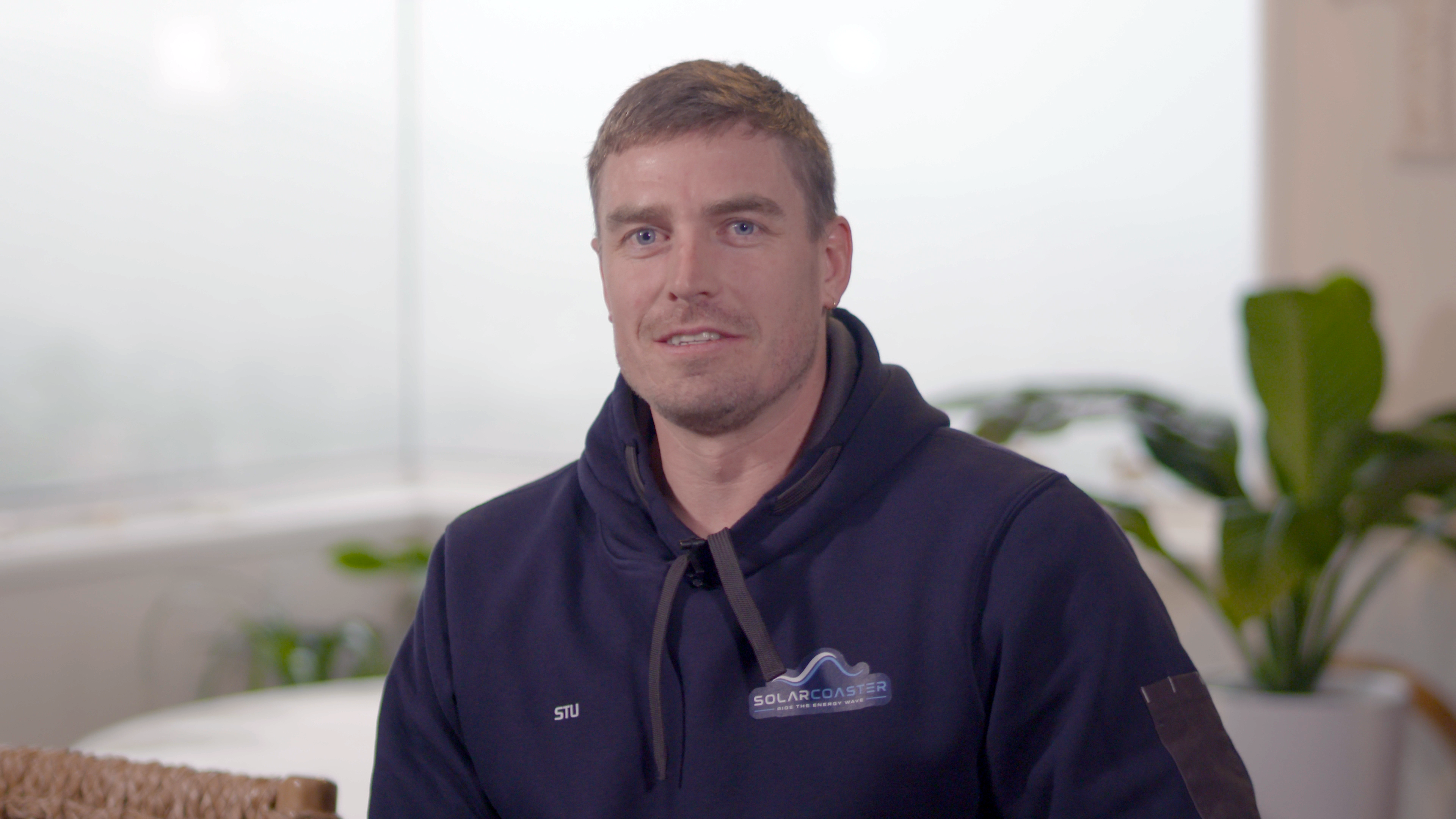
The questions to ask before you sign. The red flags to watch for. What battery backup actually means. Written by Stu, for Tasmanians who want to get this decision right.
No pressure. No sales pitch. Just an honest conversation about whether solar makes sense for your home.
Or call Stu directly: 0417 313 737